
Note: This article is an opinion piece and reflects the personal views of the author.

Time to regulate the time controls
The time controls for the two most important classical chess events, the Candidates and the World Championship, continue to be inconsistent, arbitrary, illogical, regressive, and possibly harmful to the quality of the games.
Background
Classical elite events in the 20th century allowed adjournments. Games in Fischer–Spassky as well as Kasparov–Karpov could be halted after 40 moves, with one player sealing a move before adjournment. Teams of seconds, along with the player, could then analyse the adjourned position. After 80 moves, the game could extend into a third day with another adjournment. With the advent of computers, adjournments disappeared.

The Time Scramble
Before adjournments, 40 moves had to be completed in 2.5 hours, and later in two hours. Human nature pushes most actions toward deadlines. Chess players, even those who play like engines, are still human. As a result, disproportionate time is often allocated to the first 30 moves, and moves 31–40 are completed (or not) under extreme pressure before the time control. This can produce blunders and lower the quality of chess. Clock survival, rather than chess skill, becomes the key factor in this phase.
Time Increment and the Fischer Patent
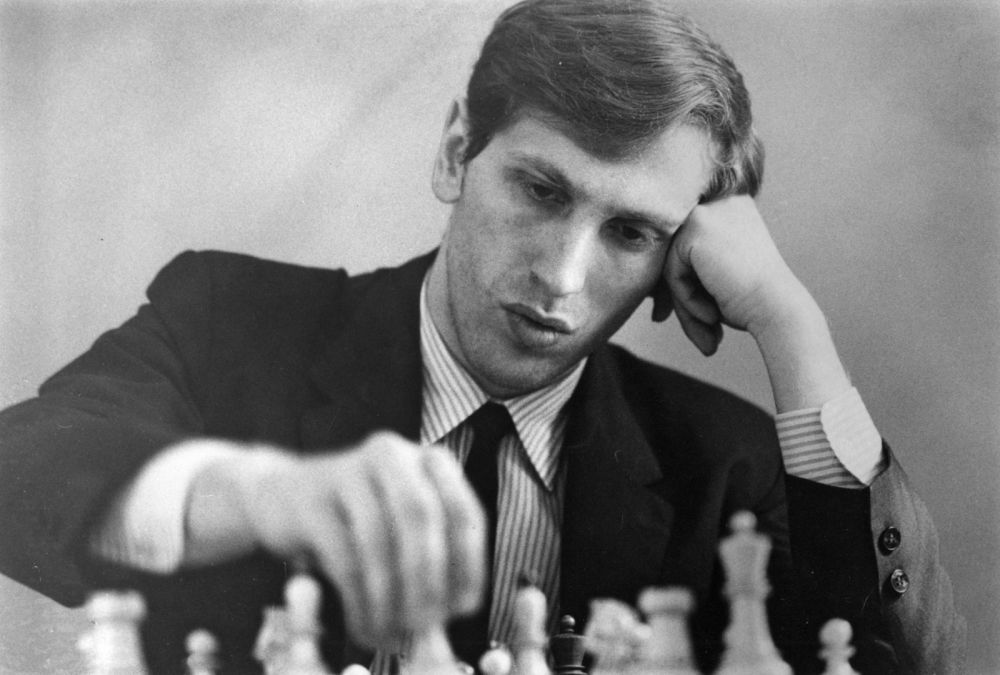
Bobby Fischer was great not only as a World Champion, but through two lasting innovations: the Fischer clock and Fischer Random. In his clock patent, Fischer described in detail how the time increment reduces or eliminates the time scramble. In essence, time trouble, if it occurs, is restricted to a single move. Each move earns the player an increment (for example, 30 seconds). The situation in which a player must make 15 moves in one minute disappears. There is nothing magical about move 40 or move 60; historically, they were simply adjournment markers.
Prescribing a total time (say 120 minutes) plus an increment (say 30 seconds per move from move one) for the entire game removes such arbitrary milestones. Time increment has revolutionised chess. Winning positions and endgames that previously could not be converted due to lack of time can now be properly played out. The 30-second increment in classical chess provides just enough time to calculate, avoid outright blunders, make the move, record it, and press the clock. It is entirely possible that Magnus Carlsen’s famous grinding technique was strengthened by the presence of increment.
The Insurance Policy
There is extensive academic research showing that:
Time pressure reduces the quality of moves and increases errors.
Time pressure alters decision-making and risk-taking.
Time pressure impairs cognitive control in chess players.
Increment from move one offers players an insurance policy against time scrambles. Offering an increment only from move 41 is like telling people they can have medical insurance only after the age of forty. Many may survive without it, but in a constant state of anxiety.
In the Name of Tradition
The fixation on 40 moves without increment takes the game back a century. But the world has moved on. Adjournments no longer exist, and time increments are universally available. Why return to the 20th century? It is like a surgeon insisting on manual surgery when laser surgery is available. That is regressive and not helpful for chess or for the players.
Writing a score sheet is also a tradition. But it does not alter stress levels the way time pressure does. Writing moves is avoidable (as blitz demonstrates), and even pressing clocks is unnecessary (in online play), yet both continue for traditional reasons. Candidates and World Championships could technically be conducted without scoresheets and with automated clocks, but that might be too revolutionary.
The time control, however, directly affects the quality of the games and therefore deserves uniformity and reform.

The Inconsistencies
FIDE’s time controls, which influence prestigious tournaments (such as Tata Steel Chess 2026), are puzzlingly inconsistent. Fischer must be turning in his Icelandic grave.
a. Why does the increment start from move 41 in the open Candidates and World Championship, but from move one in the women’s events? Is this chivalry, making life comfortable only for women players?
b. Why do rapid (15 minutes + 10 seconds) and blitz (3 minutes + 2 seconds) formats have no artificial milestones such as move 40 or move 60, while classical chess does?
c. Why has FIDE shifted in recent cycles between increment starting on move 61 (e.g., Candidates 2022, World Championship 2023), move 41 (Candidates 2026, World Championship 2024), and move one (Carlsen–Caruana 2018)? For a game as logical as chess, such administrative arbitrariness is difficult to justify.
Some spectators may enjoy time scrambles. For them, there are events such as the Global Chess League, where pieces fly, players sweat, and chaos reigns. But the Candidates and the World Championship are the classical icons of chess. They must provide the best possible playing conditions.
A Logical Proposal: 130 Minutes + 30 Seconds from Move One
Withholding increment for the first forty moves effectively saves total playing time by 40 minutes. This can easily be compensated for by slightly reducing the main time while offering an increment from move one, thereby preserving peace of mind for the players. A format such as 130 minutes + 30 seconds increment from move one is, in terms of duration, equivalent to the current structure of 120 minutes for 40 moves + 30 minutes for the rest of the game + 30-second increment from move 41.
If the Candidates and the World Championship are the icons of classical chess, their time controls must be logical and consistent, allowing the highest possible quality of play. Chess skill, not clock survival, should decide these battles.
About the author
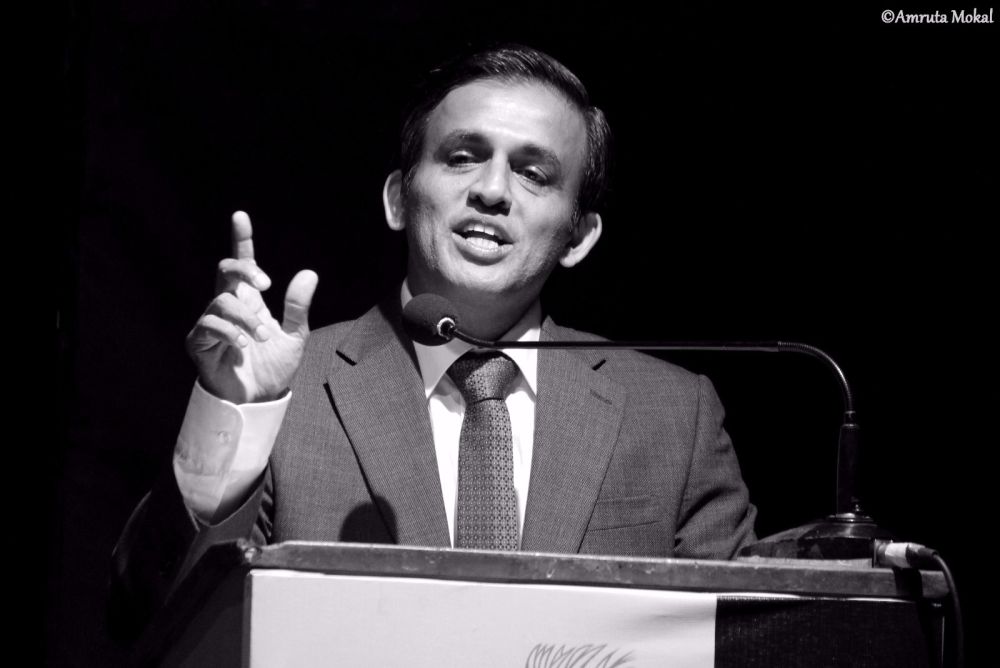
Ravi Abhyankar is an independent analyst, writer, logician and strategic advisor based in Mumbai. He previously lived in Russia and Poland for sixteen years. A lifelong chess enthusiast, he has met eight World Chess Champions and played against three of them in simultaneous exhibitions and friendly games.


