

Humpy on chess and life
Koneru Humpy has spent more than two decades playing chess at the highest level. Last month, Jonathan from Underpromoted interviewed Humpy about her journey, her approach to chess, and the experiences that have shaped her career. She spoke about her father’s influence, dealing with setbacks, balancing chess with motherhood, and what continues to motivate her to compete.
Check out the transcript of the interview below:
Jonathan: In the past, you have said that one of your distinguishing qualities is not being content after an achievement. Even if you win a tournament, you will still be thinking about how you can improve. I think that’s something you learned from your father. Are there any other qualities you would say make you different?
Humpy: Definitely determination and willpower: I think that’s very important for any sportsperson to survive for such a long period. As you said, having a chess-playing father at home, even if I won some tournaments or games, when I speak with him, there will be some sort of criticism. [Laughs] So there was never a chance to feel high; you always feel like you made some mistakes. I think that way worked pretty well. It’s good to have someone who always keeps you in shape. Also, as a player, I feel like if you are content with one victory, you probably can never be successful. You should always look forward to playing good games.
Jonathan: There was one occasion, after you won the World Rapid in Moscow, where your father simply said, “Good job”. Were there any other times like that?
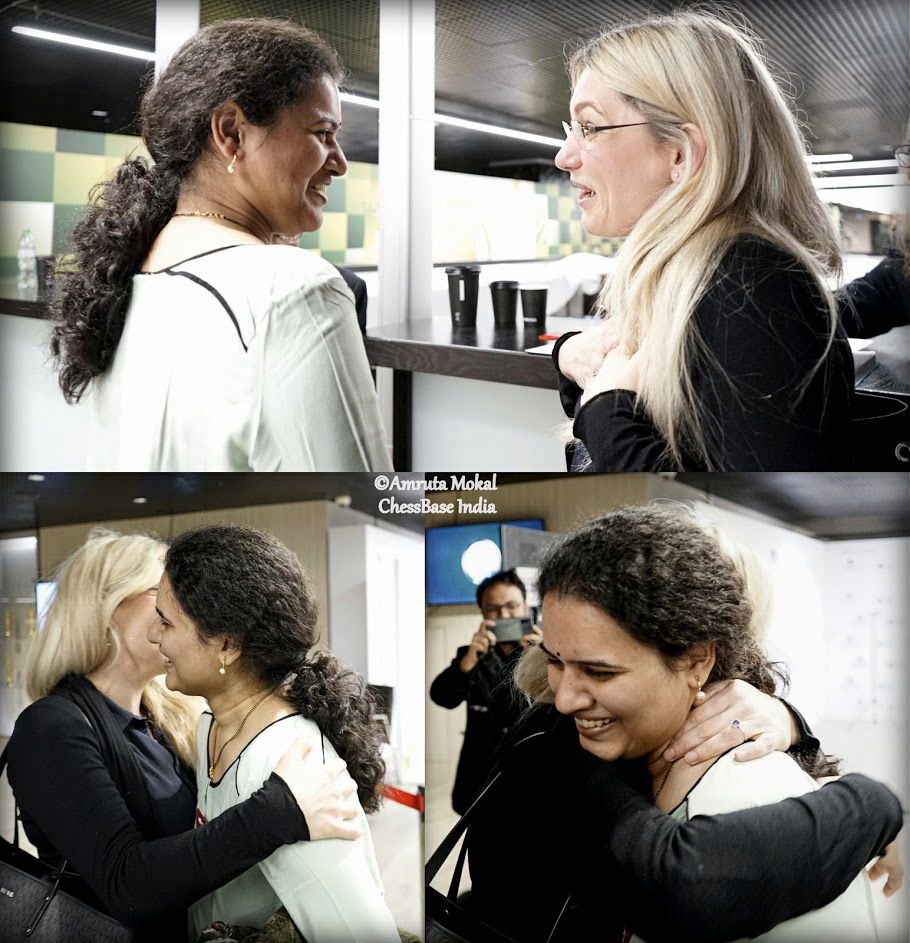
Humpy: Yeah, also after the 2024 World Rapid title. The whole year I was doing very badly; I had lost lots of rating in the classical tournaments. Then when I started this rapid tournament, I lost the first round. But from then onwards, I started doing well, and I recovered towards the end. Even before the last round, there were 7 players with the same score, so the situation was quite unclear. I think after that victory, he also appreciated my determination and not losing hope in the tournament.
But there were also times, like even though I won this Grand Prix in Pune, in the penultimate round, I had a very bad position with Black. It was completely lost, but I got very lucky to escape with a draw. Until then, I was leading in the tournament; I had all very decent games. And then one bad game; he was like, “What are you playing?” “You’re spoiling the tournament after playing so many good games.” [Laughs] Yeah, it’s true, and I had a very bad game. But somehow, I survived, luckily, and won the final round and the tournament.
I think the bonding and relationship we had as a father and daughter was a big advantage for me. The way I think, the way I process thoughts; he knows very well how I react to situations, so he could understand what’s going through my mind. In fact, as a child, when I was playing a game, he used to follow it. Of course, there were no live transmissions for these youth championships; he used to stand behind the glass doors and see the game. And he would understand the momentum, where I would make which move, with my body language. He would guess that I’m going to play this, like I’m intending these sacrifices or not. That’s the kind of understanding we had.
Jonathan: I think your father also taught you not to play for a draw, at least when you were younger. And also, if you make a bad move, not to make a silly expression.
Humpy: He was very particular that I shouldn’t agree to short draws. There were situations where my opponent offered a draw because they would get some qualification or some sort of place. But I used to deny it. Sometimes I’m successful in winning those games; sometimes I lose them, that’s a different story. But as a principle, I used to fight until the end. I think that’s very important as a growing-up player, to play games with that sportiveness.
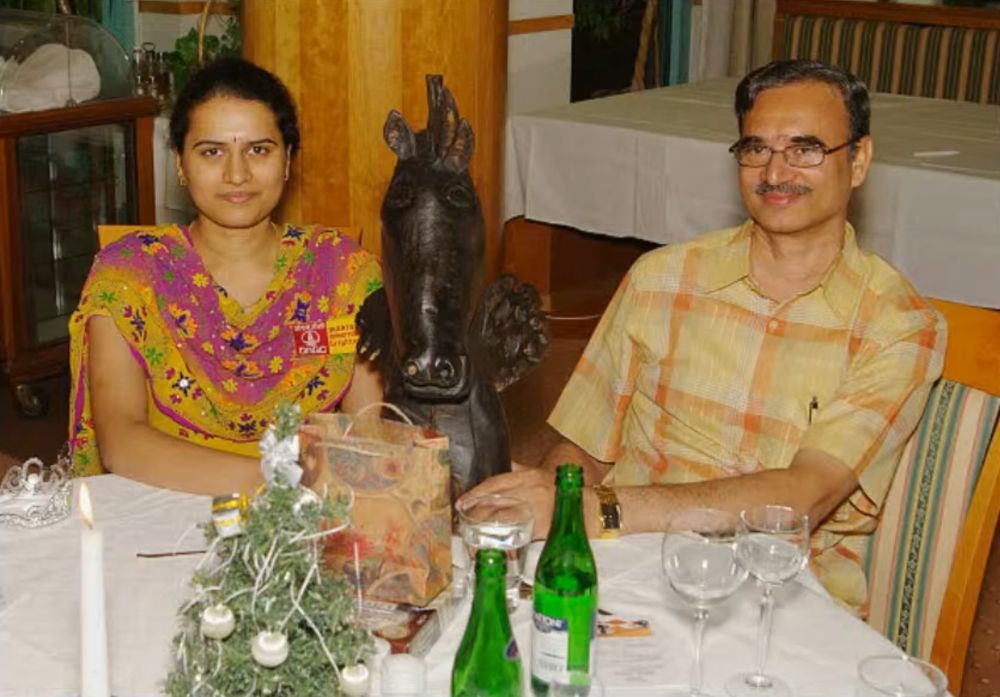
Jonathan: Are there any things that a chess parent can learn from what your father did well?
Humpy: What I have observed was that he was very strict when it comes to chess practice, like with the timing or food habits during the tournaments. But once the tournament is over, he will make sure that I had a very good, relaxing time as well. He’s not a very strict father. He gives lots of freedom. We are open to discussing anything with him. Only when it comes to chess, he will be a 100% strict coach sitting there; if you make a mistake, he will react immediately. [Laughs]
But in all else, he’s very understanding and always approachable. Even apart from chess, whatever issue I had, I could always go to him and speak openly. I think that’s very important as a parent. They should be strict at times, and also be friendly. Because if it’s always one-sided, it’s difficult for the child to release that stress. I think he managed both. And he is, by profession, a chemistry lecturer, so that’s one of his advantages in teaching me, because he knows how to handle students.
Jonathan: When you first started, your father knew a lot more than you about chess, about life. But as you kept going, you also gained more chess knowledge and certain experiences at tournaments. Was there a transition period from just listening to the coach and following to giving your own suggestions?
Humpy: Of course. Somewhere around 2011, 2012, he was completely guiding me. He would suggest to me the opening directions, or against which opponent to play which kind of positions, everything. Until then, I hadn’t used my brain in preparing against opponents! [Laughs] Basically, he would guide me, and I would just prepare in those directions and play.
Somewhere from 2012 onwards, I started preparing on my own. That’s when I started traveling without my father (then my mom used to come with me), so I had to decide what to play against a particular opponent. Initially, I struggled a bit because it was new to me. But after a couple of months, I started understanding better, and again I started winning tournaments.
Later on, it was more often my own opening preparation and everything. But he would guide me with certain things, like to follow these players’ games, where they’re playing some sort of openings or some tactical positions. Especially this 2024 World Rapid: around one and a half months before that, I hadn’t used a chess engine at all. I was only following these online games and then playing some blitz and rapid games online and solving puzzles. That’s the only thing I did. I basically switched off the engine completely.
Because just two months before, I played in this Tata Steel and had a very drastic score, and I had lost my confidence. I felt like, “Can I still compete?” The whole year I was doing badly in most of the tournaments, so I wasn’t happy with my chess. So there were times when I expressed, “I don’t see a point in playing, leaving my child at home”, and on. But then, again, he motivated me a lot and guided me. Probably, that win also helped me to gain confidence and get back to chess.
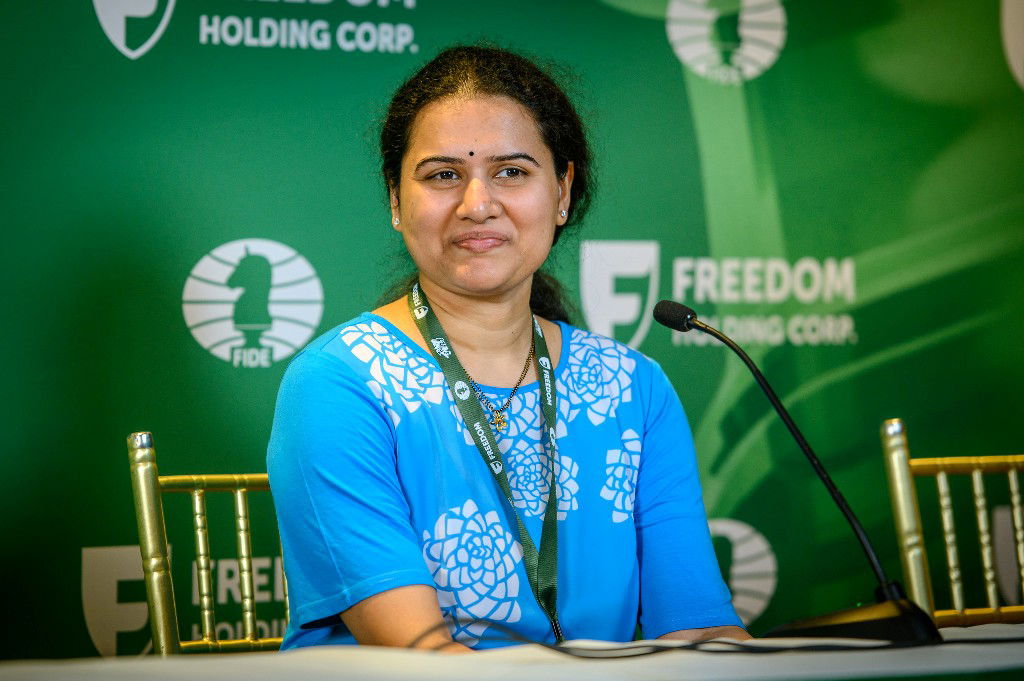
Of course, as a player, there are a lot of ups and downs. Even this year, I was having a very bad start; even though I haven’t played much, I had a bad start in Norway Chess. So it’s not easy to sustain at this level with a lot of youngsters, and also to maintain family life, kids, and everything. But yes, I am trying my best to play some good games.
Jonathan: You’ve described two phases of your career. One is before 2017 (or around there), before you took a break. And then you took 18 months off with your daughter, and then you went back to chess. Is that still how you’d describe your career? Do you think there’s a new phase?
Humpy: Yeah, definitely. Because for the whole one and a half years, I hadn’t seen any chess at all. I literally hadn’t even followed any of the tournaments, so I was completely away from chess. I just started practicing a month or so before playing this Chess Olympiad in Georgia. That was 2018. So that was my first tournament after the break. When I returned, basically my opening knowledge went back to zero. [Laughs] So I had to start preparing, fresh, everything. And then I started doing well in 2019 and 2020, where I won the Grand Prix, World Rapid title, and also the Cairns Cup in the US.
But then again, I had a break with COVID, so we didn’t have any tournaments, and I didn’t travel for a long period. Somewhere until 2022, I wasn’t playing much. From 2022 again, I started playing in the tournaments. Sometimes it’s also good to have those kinds of breaks to refresh yourself. And I’m also happy; I had no regrets because my daughter was two at the time, and I wanted to spend quality time with her.

Jonathan: When asked in 2007 about your most important accomplishments, you said winning the World Junior in 2001, when you were 14; becoming GM in 2002, when you were 15; and then winning the two international open tournaments in Europe. Is there anything else you would add to that now?
Humpy: Of course, winning the two World Rapid titles in 2019 and 2024. If I have to talk about the best, obviously the open tournaments which I won in 2007, because that was the period where I crossed the 2600 mark. I think that’s the best phase of my career, between 2007 and 2010, where I was playing a lot of open tournaments and maintained around 2620-2630. From around 2015 to 2016, I had my downfall with the rating after I got married, and then my daughter was born. But as a player, coming back and winning the world titles is very special.

Jonathan: Sometimes chess players will talk about how you need a little luck to win a tournament. It’s not just that you did well, but maybe something went in your favor, so you did a little better than everyone else. When you were little, there’s a story about how one time, your father told you to play 1. Nf3 in the last round of a tournament. You were tied for first. But then you were sick, so you forgot and played your usual 1. c4, and your opponent played the Dutch defense. So that was lucky because you knew how to play after 1. c4 f5 but not 1. Nf3 f5. You ended up winning that game and the tournament. In your professional career, can you think of any lucky moments like that?
Humpy: If I have to talk about luck, probably the 2024 World title is like that, where I had a lot of seesaw games, but I turned them around during the last couple of seconds. Whereas I was very unlucky in the World Rapid Championship 2025, because if I see the quality of the games, 2025 was much better. I was keeping control in almost every game, and I was outplaying my opponents. In the final round, I was completely winning, and then I blundered and made a draw. I tied with two more players, and I didn’t have a good tiebreak to play these tiebreakers for the gold medal. So I had to be content with the bronze.
So somehow I felt like when I gave my best, I had to settle for the bronze. But when I was struggling, jumping here and there, I was very lucky to win the title. Sometimes, more than chance, it’s also about your mental toughness. The circumstances should also favor you to win these titles.

Jonathan: Something you’ve talked about is the low points of pro chess. People have asked if you want your daughter Ahana to be a chess player. You said, if she wants to, you will support her, but there’s a lot of suffering as well, and you don’t want to see her suffer. For you, when does a low point happen? What does it feel like?
Humpy: Oh, I think there are several in my career. If I had to go back, when I became GM at 15, I wasn’t successful in many tournaments. I struggled a lot. In many of the open tournaments, I wasn’t scoring well, and I started losing my rating points. There was also lots of criticism, and it was not easy for a 15-year-old to handle the pressure of the board. Also, chess was not a very celebrated sport in India in those days. I didn’t have any sponsorship; my family had to struggle a lot to support me to play in tournaments. We didn’t have so much prize money in women’s chess, either. Compared with the scenarios now: we have plenty of titles and lots of prize money. So back then, it was difficult to sustain myself in that period. Between 2002 and 2005, I was struggling a lot after becoming a grandmaster. Somewhere from 2006 onwards, I started slowly improving my rating and again winning the tournaments.
There were several stages like that. Again in 2011, I had a very bad experience in the world title match with Hou Yifan. I didn’t manage to win a single game. Especially when you play these kinds of matches, if you lose so drastically, it feels even worse. Rather than thinking about the titles, if you are losing game after game, you don’t feel nice to take up the challenge and fighting for that. It wasn’t easy to get out of that. And also, a couple of tournaments: these World Cups, knockout World Championships. My toughest one was also 2018, when I came back to chess. My initial tournament was the Chess Olympiad, which I played reasonably decently. But then I went for the World Cup, and I lost in the second round itself.
As a player, I don’t think it will be a very smooth rally. You have to have your highs and lows every time. But the key point lies in how much rise you can give back when you are at your low. If you can come back whenever you hit your low point, that’s fantastic. But it’s quite a tough period for anyone.
Jonathan: When you’re at the low point, it could be minor, like you’re sick in a tournament, or it could be longer, like you had several months where you were doing poorly. What has helped you continue playing for so long and always coming back?
Humpy: There were times when I wanted to quit after I had very bad losses. But after returning home, I would think: even if I had to quit, I shouldn’t leave the sport as a loser. [Laughs] I always wanted to do that with a very successful win, like a happy ending, right? So I would think: maybe I’ll give it one more shot, where I could come back and show my strength. That’s how it used to happen at certain points from the past couple of years.
But generally speaking, both my parents were very encouraging, and they were very supportive, even at my lows. They would say, “It could happen to anyone,” “You were handling many things,” “You shouldn’t be worried about that one result.” That’s what they would always say. So having such supportive parents and family, that really helps me to always come back.
Jonathan: Outside of the low moments, in the everyday or the high moments, what’s your motivation? Because nowadays, you don’t have to prove as much.
Humpy: Yeah, more than proving, I just want to play very good games. That’s what is more important: to play fighting games. Also, I don’t want to be a player who just plays in tournaments to have fun, something like that. If I’m playing a tournament, I want to give whatever best I can. I don’t see a point in playing tournaments without any ambition. You might have failures, but at least once in a while you should be able to win it! [Laughs]
Jonathan: Chess players have different ways that they think about chess: as a job to earn money, a passion they love, a career to work on, etc. For you, what’s the first way you relate to chess?
Humpy: I always see chess as a profession. Because when I play a tournament, I always give my 100% into it. I don’t even speak to my daughter sometimes for a few days. Even if I might be having a bad tournament, I try to focus in whatever possible way I can. Of course, there are tournaments which I just play for enjoyment, like when I play these rapid and blitz tournaments. I don’t push myself too much; I just enjoy playing short time controls. Sometimes I don’t even take them too seriously. But classical especially, I never played a tournament without preparing or just for fun, you know?
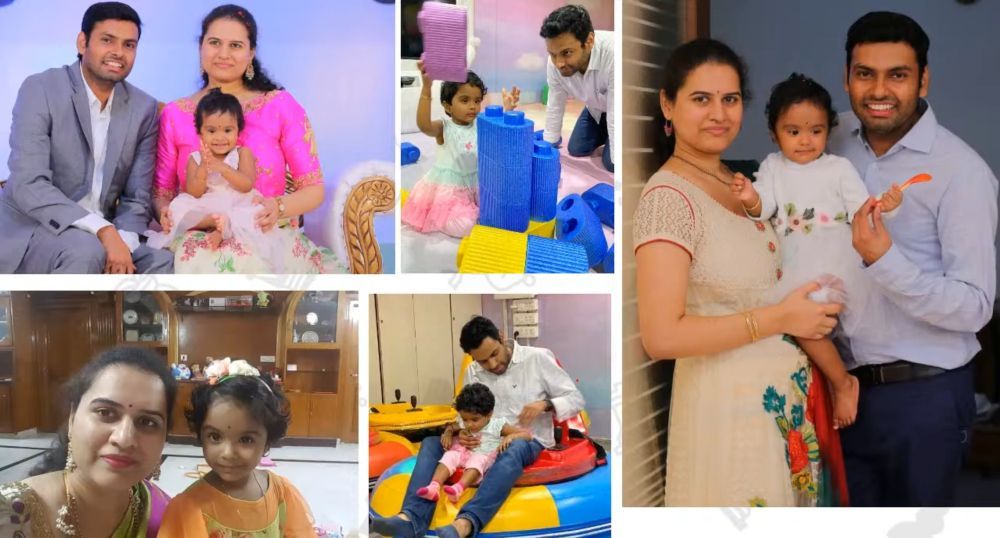
Jonathan: One thing that really stood out to me from preparing for this interview was your determination. But the other thing was how you balance chess and other things in life. On that topic: since you had your daughter, you said sometimes you don’t do chess training for a while. How long might you not look at chess for?
Humpy: Sometimes it happens that I don’t even see chess for a week or so. It depends. If she has summer holidays in school or something, when she’s at home, she likes to spend time with me. We go out, or we play together. But now, since she has grown up a little bit, I do get a chance to work on chess since she goes to school for the full day. But of course, during the weekends, usually Saturdays and Sundays, it will be very light on chess, because most of the time will be spent with her.
Also, what I observed was: especially when I play a tournament, after returning home, that’s when she really misses me. So I will not be able to get back to my routine for at least a week to 10 days. It happens very often when I come back from the tournament, because she always wants my presence with her in whatever activity she’s doing.
Jonathan: Is it easy for you to tell your brain, “Stop thinking about chess”? Because you can carry chess around in your head.
Humpy: No, actually, I got used to it, because practically, it’s very difficult when the child is demanding your time. You can’t sit and focus on your sport; it’s better to spend the time with her, and when she feels comfortable, that’s the right way to get back to the sport. So I am used to it.
Also, I try to keep a bit of a break between the tournaments, like at least a one-month break, so that I could spend some time at home and then again travel back to the events. I feel balancing is very important as a mother. I might be a very successful sports person, but if I am not managing my child well in her growing-up years, it wouldn’t make sense to build up a very good career for me if I don’t care for her.
Jonathan: Let’s say you haven’t done chess for a week; you were on holiday with your family. Your first day back to chess training: do you feel very slow?
Humpy: Oh, it’s horrible! Yeah, it happens many times. When I get back, I’ll start with playing training games, and my score will be drastically very bad. But after a couple of days- two, three days- I’ll start improving. Slowly, I’ll improve. Initially, it will be very bad for sure.
Jonathan: Do you think your chess level would be a lot different, or do you think you're able to maintain your chess strength even while having an amazing balance?
Humpy: No, I think comparatively, my level is low. Comparing with then-Humpy. [Laughs] Because back then, I used to play quite sharp positions at certain times, and I used to be very accurate in winning in must-win situations. But there are certain drops, chess-wise and in handling those pressure situations. But some things you can’t improve when you are around 35 to 40. You have to face that struggle and keep moving on.
Jonathan: It’s also about finding the right balance. Right now, you’re in the women’s top 10. So if you can be a top 10 player and also have a good family life, it’s different than when you’re a youngster trying to play in the open tournaments and stay 2600.
Humpy: Of course. That impact shows on my rating drop also: from #2 to now #8 in a couple of years. It’s a lot of difference, but I really still want to get back and improve my classical ratings, because I lost a couple of points in Norway. And I’ll be playing in the Cairns Cup in a couple of days, and also in the Chess Olympiad as well. These two are very important tournaments, not only for me, but as a team, we will be representing the country.

Jonathan: As Ahana is getting older and more independent, you have a little more flexibility. Do you think you’ll be able to compete even more in the coming decade?
Humpy: Well, of course, I am planning to play more tournaments in the next two months. But I do take certain breaks to make sure that she’s comfortable. I should make sure that she doesn’t miss me for a longer period. That’s what happens between the tournaments. I see my competitors; they will be playing continuously in different tournaments. But I am satisfied with the way I have been choosing the events. Sometimes it’s very difficult, when I have a longer break, to get back into form. So that becomes challenging for me.
But probably in a couple of years, if I have to think about that, maybe if I’m not competitive enough, I won’t be a professional any longer. Because I was always an ambitious player, in whatever level of tournament I’m playing. If I’m not able to succeed that way, probably I’m not the kind of player who will just stay in the field for the namesake or any other reason.
Jonathan: Obviously, there was a lot of pressure for you as a chess player growing up. However, there was one thing that you said might have made it a little easier for you as a girl: for men, there were many cultural expectations that they should become breadwinners and have a career, so being a chess player was a big risk. For you as a girl, there were fewer of those social expectations. Nowadays, as you see the world, what do you think has made it easier for girls in chess? And is there anything that has made it more difficult?
Humpy: For girls, chess has become more professional, I would say. Because earlier, we didn’t have much money in the sport, especially for women’s chess. Nowadays, every tournament is being organized in a very professional way with lots of prize money, where I could see women players hiring seconds and coming to the tournament with 1 or 2 people surrounding them. So that way it has evolved more professionally. Now, any player can think of surviving as a professional in the sport, but 20 years ago it wasn’t like that. You can’t imagine yourself being a professional here, earning money, especially for the women players. So today the scenario has changed. I think the future will be even brighter.
But the only disappointing thing in the whole thing is that playing in these women-only tournaments will definitely not help a youngster improve further in rating or to compete against the strong men players. So that’s the drawback in the whole format. When they had more opportunities to compete with the men players, I think the chances of them rising are also very high. So balancing both men's and women's tournaments is not that easy. Of course, it’s quite challenging for any player to target certain things and also to manage other events as well.
Jonathan: On the one hand, there might be many more IMs or GMs who are women. But on the other hand, maybe it’s harder to have 2600 women players.
Humpy: Right, 2600 or 2650. If we want to see women at such a level, I think they should compete more and more in the men’s circuit. Playing in these Grand Prix or in certain round robin tournaments doesn’t really help them to improve further.
Jonathan: First question: people often talk about how older players have experience, while younger players have energy. But what does that actually mean? Do you ever feel like, “Oh, I’m glad I have the experience; I can play this tournament well or play this position well,” or do you feel sometimes, “I didn’t do well here because I didn’t have the energy”?
Humpy: In recent times, it’s more like I felt like, “Oh, I didn’t have energy.” I know I suffered a lot because of that in many tournaments. Like when I was doing well, I started collapsing because of not having energy. It really showed in my results. But of course, experience is definitely a big advantage when you are in very good shape. When you are very alert tactically, and you feel well prepared with the openings, that experience of outplaying the opponent really works well there. But when you are a bit shaky, I think experience doesn’t matter. You’ll just start falling.
Jonathan: I think experience is the one that’s a bit harder for me to understand. Is it like you have a better sense of which direction to go when you’re in a promising position? Can you talk a little bit more about what experience means?
Humpy: You’ll also understand where to take risks in certain positions. As a youngster, I might play some dubious attack because my determination would be more than the position. I would be thinking about the result more than defending the position. That would dictate me to play some dubious tries, which would be very bad if the opponent has good strength; they’ll just prove it. It only works with weaker players when we play such kinds of moves. But as an experienced player, you will understand: you should not try that kind of play.
But also, there is the other side of the story: when you are doing those kinds of dubious things, that means that you are desperate to play for a win. You are very ambitious to try for a win in every game. But with experience, sometimes you also become very solid; you don’t take those risks. I think it’s always about balancing things.
Jonathan: On the Olympiad team, you are all very strong players. Vaishali and Divya are right up with you competing at these top events. But as the most experienced player, do you feel, perhaps not officially but just internally, any extra responsibility or extra role?

Humpy: Not really. Because I haven’t played many of the Olympiads, to be frank. There might be a possibility that it is the same number as the other youngsters as well. [Laughs] I’m not sure about that. But anyway, I’m not thinking in that direction at all. As a team, I think every player has to give their best, and it’s more important that everyone believes in themselves and the team, and to play over the board, rather than calculating the results or the outcome. I think it would be too early to think of any medals or something. Of course, we had a very strong team, and India won the gold medal in the previous year. Winning is something very good. But to retain that title, you need to be playing extremely well. It’s going to be quite challenging as well.
Jonathan: If you have a bad tournament, an important attitude is how to come back. But if you win a tournament, you also need to stay focused. Coming from a strong position when people might say, “Yeah, India has a very strong team, India might win again,” what do you think is an important attitude for winners to have?
Humpy: Oh, I think it’s always better to forget about the previous results and to think fresh. To think from the start. Playing a tournament without expectations and just to take game by game is the best way. Especially in the team event, it’s not even dependent on one player. The entire team has to do well. So it’s a long tournament. I think we should first concentrate on how to get into the tournament in a positive way.
Jonathan: Your first Olympiad was in 2004, and now you have this Olympiad. How are your feelings before this Olympiad different compared to your first time?
Humpy: This is one of the strongest teams which we ever had for the Olympiad. I also played in the 2022 Olympiad in India, but comparatively, this team is even stronger, and I think we will have our best chance. As a player, I was never really successful in any of these Olympiads; I always lost my rating. So I really want to do well in this tournament, and I really wish we could make it successful.
Jonathan: Well, to wrap up: a few more lighthearted questions. Going back to your father, you said he plays a lot of online chess, even more than you. Does he have any favorite openings, time controls? Do you ever give him any coaching?
Humpy: He likes to play 10-minute games; he doesn’t like blitz much. He always tries to keep some increment. He’s not particular about openings; he’ll play whatever he likes on that particular day. But he enjoys playing, and he follows all the tournaments. Sometimes I even miss watching those games, but then he would suggest me to see this game, like, “This player has played amazingly,” something like this. He plays chess 24/7. I only look at it professionally when I’m playing a tournament. But he enjoys the sport very much.
Jonathan: You have mentioned that, as part of your tournament routine, before you go to sleep, you might watch a few comedy scenes from Telugu movies. Do you have any favorite Indian comedy movies?
Humpy: Oh, comedy movies. Actually, there are a lot in the regional language. If I had to name one, “Panchatanthiram” is a movie of Kamal Haasan. Also, there are a lot of movies of Rajendra Prasad. When I had a very stressful game, I just wanted to come out of it and to feel fresh for the next round. So that’s when I watch some comic scenes, and then I go to bed. Sometimes, I also listen to music when I’m preparing. Most of the time I have been traveling alone, so I don’t have anyone to speak to and release that stress. So these are my stress busters. I also go for long walks to get refreshed. I think every player will have their own style, their own way of getting out of it. But of course, I particularly make sure I have a regular bedtime and a time I wake up when I’m playing tournaments. I strictly follow that.
Jonathan: What are the most common musicians or songs you listen to?
Humpy: Most of them are our regional language songs. I usually like the melodies from between 1990 and 2000. I like old melodies more than the present music.
Jonathan: There was a ChessBase article that had a recipe for a fish curry that you gave them. What are some of your family’s or your favorite dishes that you make?
Humpy: In recent times, more than cooking main dishes, I have been trying desserts more often. And my daughter, whenever there is a weekend, or she has a holiday, she’ll ask me to make some of her favorite desserts. Sometimes we make caramel pudding or apricot delight, these kinds of things. She likes homemade cake as well.
Jonathan: You’ve said before that if you had quite a bad event and you’re trying to get out of it, sometimes you do some online shopping. Was there anything really good that you bought once after a bad tournament that you still use?
Humpy: Actually, when I am in a very bad mood, like when I lose a tournament or something, I always try to get my mind out of it. I just want to take my mind out of chess and do something different. Sometimes I buy some clothes or some hair accessories online. But whenever I wear new clothes for tournaments, if I don’t win that game, if I have a bad result, I will never use it again in a tournament. Or earlier, it used to be even the pens I bought. I used to buy a pen, and if I’m successful in the tournament, then I would repeat that pen for every game. But if I’m not, I wouldn’t use it at all. Nowadays, we don’t have that opportunity to use the pens anymore; we are not allowed to carry them. But I used to be very sentimental about those things. It’s also very easy to do online shopping rather than going out. It’s good for chess players who are too lazy to go around and buy.
Jonathan: Before we wrap up, are there any upcoming tournaments that people can follow you at
Humpy: I’m playing this Cairns Cup and then the WR women’s tournament in Saint-Tropez, France. And of course, the Global Chess League, the fourth season in India. Then comes the Chess Olympiad. So there are a lot of tournaments coming up for me, and I really hope that chess fans will also enjoy watching them.
Jonathan: Well, thank you very much, Humpy ma’am, for taking the time to do this interview. And to everyone watching, what I really appreciate is not only her accomplishments in chess, but how she thinks about chess and life in general. Thank you!
Check out the full video interview here:
To get notified about new articles, join the ChessBase India WhatsApp Community.


