
Why offline chess academies still matter
In recent years, chess training has evolved rapidly. With the rise of online platforms, players today have access to top coaches, databases, and resources from anywhere in the world. While this digital revolution has undoubtedly accelerated improvement, the role of offline chess academies continues to hold a special and irreplaceable value, especially for ambitious players. Offline academies provide a disciplined environment, regular face-to-face interaction with coaches, and the opportunity to train alongside equally motivated peers. For many players, this setting develops focus and emotional control, which is difficult to develop in online setups.
It is from this understanding that Grandmaster Swapnil Dhopade has taken a significant step by launching his own offline chess academy, Chess Pathshala, in Nagpur. He spoke in detail about his coaching journey, the reasoning behind starting an offline academy, and his long-term vision for Chess Pathshala.

Q: Can you tell us some of your best chess coaching achievements?
A: I have been actively involved in coaching for the last 6–7 years, and it has been a deeply fulfilling journey. One of my earliest students was Raunak Sadhwani, who went on to become one of the youngest Grandmasters in the world at just 13 years and 9 months. Watching his growth from a very young age remains one of the most special experiences of my coaching career.
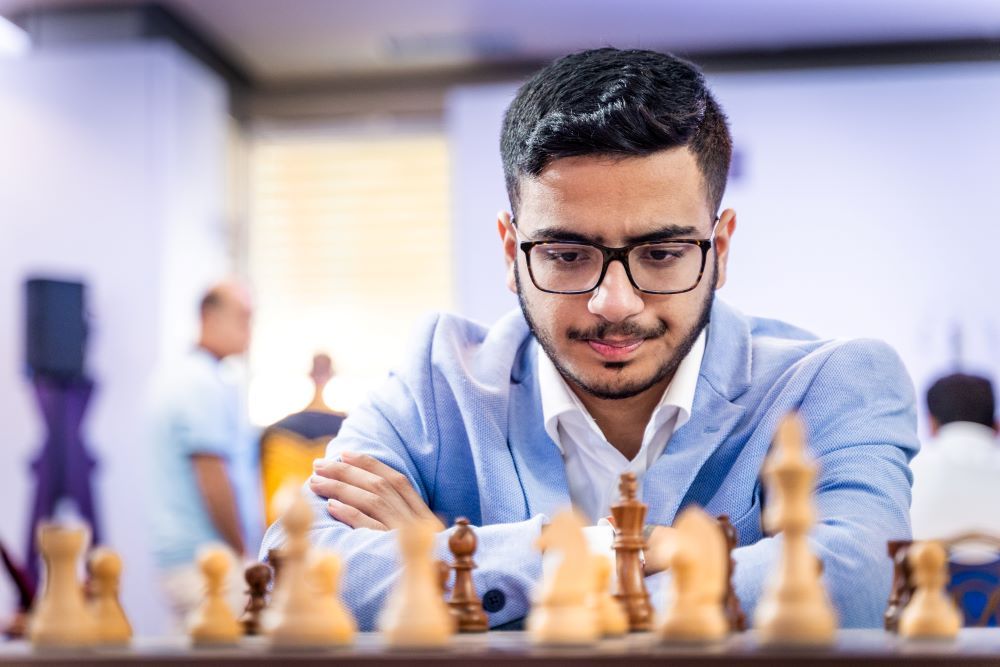
More recently, my student Shubhi Gupta won the National Junior Championship 2025, which was another proud moment for me as a coach.

There have been several other notable achievements along the way. I worked closely with GM Sankalp Gupta from the time he was an International Master, and within roughly two years of our collaboration, he achieved the Grandmaster title.
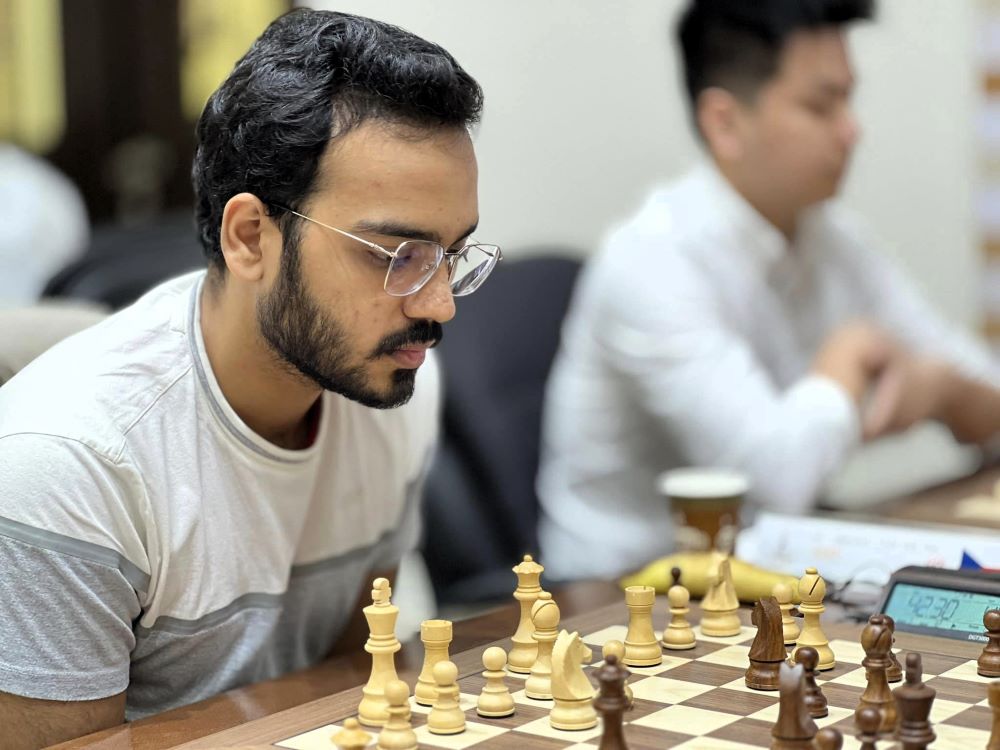
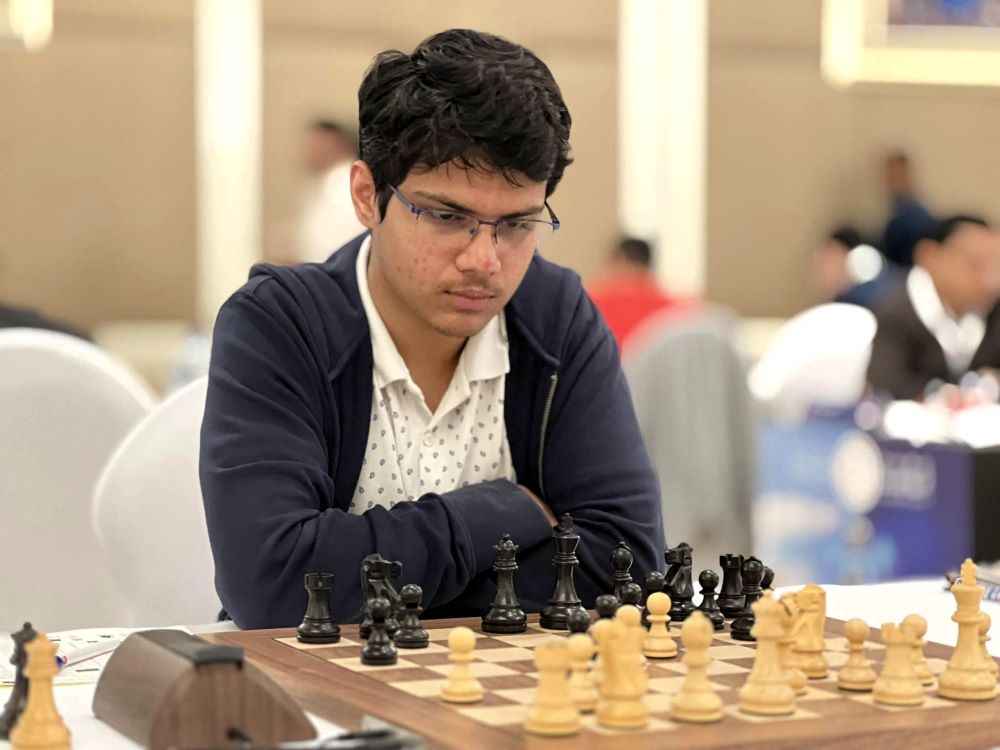
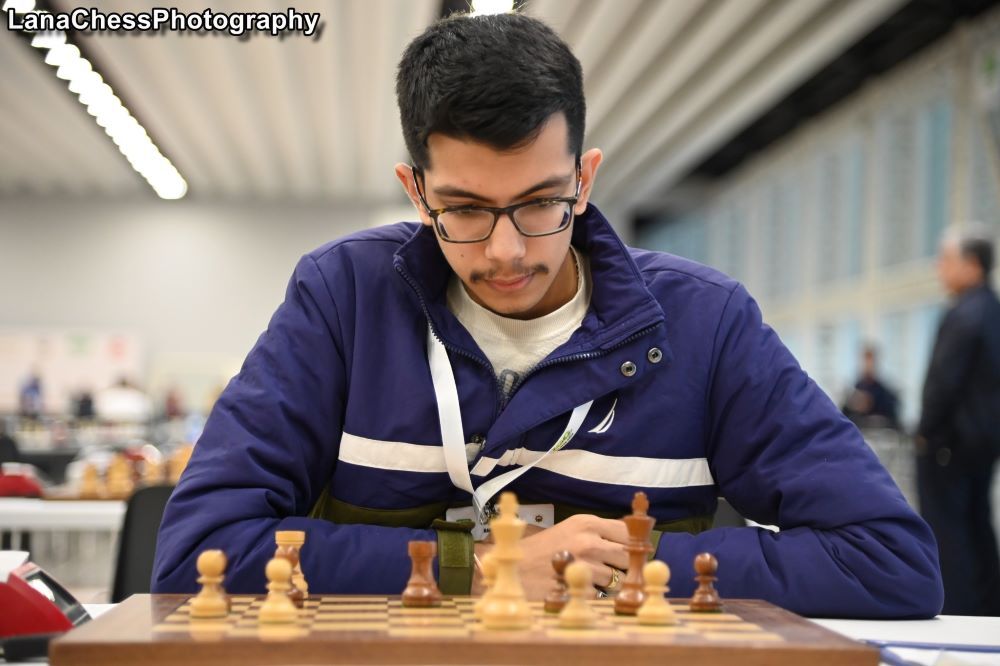
Soham Kamotra became the first International Master from Jammu & Kashmir, and Dushyant Sharma became the first International Master from Punjab while working with me.
Another special journey was with Sherali Pattnaik. When we started working together, she was rated around 1700, and within the next two years, she crossed 2300 as her peak rating.

Apart from individual successes, I have also had the opportunity to work with many International Masters and Grandmasters over the years. On the team side, I have worked with the Indian Women’s Team on multiple occasions, including the Chennai Chess Olympiad, the World Team Championship, and the Asian Nations Cup. These experiences have shaped my understanding of high-performance chess and coaching at the highest level.


Q. Why did you feel like starting an offline academy?
A: For the past six years, most of my coaching work has been conducted online. While online coaching has its own advantages, I always noticed a very clear difference whenever I conducted offline camps. The level of concentration, commitment, and seriousness among students was significantly higher in an offline environment.
As a coach too, I felt that my impact was much deeper when interacting with students face to face. The quality of discussions, the ability to read a student’s mindset, and the overall learning atmosphere felt far more effective offline. Over time, I strongly felt that to grow as a chess player, regular offline interaction with a coach plays a crucial role. Another important aspect is the energy that is created when a group of motivated and ambitious players trains together. That collective seriousness and competitive spirit is very difficult to replicate online.
For the last two years, after shifting to Nagpur, I had been planning to start an offline academy specifically for ambitious tournament players. It took time and courage to take this step, but eventually I felt this was something I truly believed in and had to pursue.


Q. What is your vision for this academy?
A: Anyone familiar with the chess coaching world knows that online coaching is generally more profitable than offline coaching. So the primary motivation behind starting this academy was never financial. The vision is to create a quiet, focused, and serious training space where ambitious chess players can come together and work consistently on their game. With structured guidance from me and a dedicated team of coaches, I want this academy to genuinely help players move closer to their chess dreams.
I also see this academy as a potential training hub for players from all across India. One important gap I personally experienced while growing up was the lack of easy access to strong Grandmaster guidance, especially in North and Central India. I worked extensively with Ramesh sir during my journey to becoming a Grandmaster, but that always required traveling to Chennai, which was not easy or frequent. Through this academy, I want to help bridge that gap by giving players from North and Central India an opportunity to train regularly with a Grandmaster without having to relocate far away. If we can produce more strong players and future Grandmasters from this region, it will naturally help in spreading and strengthening the chess culture here as well.

Q. In this world of digital connectivity, what do you think are the benefits of an offline academy?
A. There is no doubt that the internet has completely transformed chess, especially after COVID. Players today can work with coaches from anywhere in the world, and this has significantly accelerated chess improvement globally. However, despite all these advantages, I firmly believe that building a deep coach–student connection is far more effective in an offline setting. The level of focus, motivation, and productivity is much higher when training happens face to face. The feedback loop is faster and more precise. Offline training allows a coach to observe not just the moves on the board, but also a player’s thinking process, body language, emotional reactions, and overall approach to the game. These subtle but critical aspects are often missed in online sessions.
Additionally, the energy and healthy competitiveness that develops when a group of motivated students trains together in the same space is unparalleled. That environment naturally pushes players to work harder, think deeper, and improve faster, something that is extremely difficult to recreate in a purely digital setup.
Students interested in attending regular offline coaching camps at Chess Pathshala can fill out the form here. The first offline camp will be held for players rated above 2100. The camp is from 12th to 18th February. The fees will be Rs. 14,200 per player. Timings will be 2 PM to 5 PM. Here is a confirmed list of participants for the camp:
Players | Rating |
|---|---|
Vaibhav Raut | 2335 |
Sidhhant Gawai | 2281 |
Mrudul Dehankar | 2237 |
Srishti Pandey | 2224 |
Shaunak Badole | 2176 |
Vivaan Saraogi | 2163 |
Kushal Jain | 2157 |
Priyanshu Patil | 2146 |
Sakshan Wadhwa | 2063 |
Coaches who wish to be associated with Chess Pathshala for offline as well as online classes can register here. The camp is from 12th to 18th February.
For more details about Chess Pathshala, you can contact or WhatsApp at +91 98603 94603.


