

Ramesh Dhirajlal Sheth (17 April 1938 – 27 July 1999)
Having recently had the honour of serving as Coach and Captain of the St. Kitts and Nevis Open team at the 46th FIDE Chess Olympiad in Samarkand, Uzbekistan, my thoughts turned to another Olympian- a distinguished member of our community who represented India at the 14th Chess Olympiad in Leipzig, East Germany, in 1960: Shri Ramesh Dhirajlal Sheth.

Sixty-six years separated our Olympiad journeys. I never had the opportunity to meet him, yet the connections between us make his story deeply personal to me.
We are both Gujaratis and belong to the Dasha Sorthiya Vanik (DSV) community. We were both born in Mumbai and share roots in Bhavnagar. My mother came from Bhavnagar, and the families of my maternal uncles continue to live there. It was through these connections that I eventually came to know something of his life beyond the chessboard.
Through his nephew, the late Shri Madhukarbhai Sheth, he became, affectionately and respectfully, “Ramesh Kaka” to me.
Madhukarbhai’s father and Ramesh Kaka were brothers. Naturally, Madhukarbhai referred to him as his Kaka, his paternal uncle. As we spoke about him, I too began to address him as Ramesh Kaka. An enquiry about a former Indian Olympian gradually became a personal wish to preserve the memory of an elder connected to my own heritage.
A request from Manuel Aaron Sir
My search began in 2012, when International Master Manuel Aaron Sir asked whether I could help obtain further information about his old teammate.

Manuel Aaron Sir occupies a distinguished place in Indian chess history as our country’s first International Master. I have always addressed him as “Sir,” with the respect due to an elder whose achievements and contribution have inspired generations of Indian chess players.
Manuel Aaron Sir and Ramesh Kaka had represented India together at Leipzig and shared a warm friendship. Sir knew of his teammate’s connection with Bhavnagar and Bombay, but contact had been lost after Ramesh Kaka moved overseas.
While working on Indian Chess History with Shri Vijay D. Pandit, Sir hoped to learn more about the later life of his friend. His request stayed with me. It was an opportunity to help preserve the story of someone who had represented our country.

With four maternal uncles from Bhavnagar, I felt there might be someone within our family circle who could help. Those connections eventually led me to Madhukarbhai.
Finding him brought a name from India’s chess history closer to home. It also provided a family connection through which Manuel Aaron Sir could learn something more about his former teammate.
Madhukarbhai did what he could to keep his Kaka’s memory alive. He shared the information and recollections available to him, helping us piece together parts of a life that had taken Ramesh Kaka far from India. Although the family’s contact with his uncle had been limited, Madhukarbhai’s efforts gave us a precious link to those distant years.
A brief career with lasting achievements
According to Indian Chess History, Ramesh Kaka was born on 17 April 1938 in Kandivli, Bombay. His family roots were in Bhavnagar, while his competitive chess flourished in Bombay.
His years at the forefront of Indian chess spanned 1957 to 1961. It was a relatively brief period, but one marked by strong performances.
In 1957, he finished second in the Bombay State Championship, behind Shri Nawab Ali and ahead of Shri Rusi Madon. He also secured sixth place in that year’s National Championship at Poona. His best national result came in Delhi in 1959, where he finished fifth.
The following year, Ramesh Kaka earned the honour of representing India at the Leipzig Chess Olympiad.
He also contributed to Bombay’s victory in the 1960 Inter-Association Championship in Madras. Playing on the second board, he remained undefeated and scored 6½ points from eight games.
These achievements deserve to be remembered as part of the contribution made by an earlier generation of Indian players, who pursued the game when resources and international opportunities were limited.
Leipzig: alongside the pioneers of Indian chess
India first participated in a Chess Olympiad in Moscow in 1956. Leipzig marked an early year in our country’s international team chess journey.
The Indian team comprised four distinguished players:
Board | Indian representative |
|---|---|
1 | Shri Manuel Aaron |
2 | Shri Ramchandra Bhargava Sapre |
3 | Shri Mulk Raj Wahi |
4 | Shri Ramesh Dhirajlal Sheth |
For me, Shri Manuel Aaron will always be Manuel Aaron Sir. The names of Shri Sapre, Shri Wahi and Ramesh Kaka likewise deserve a respectful place in our recollection of Indian chess history.
Ramesh Kaka played on Board Four throughout the tournament, completing all 20 games. The Indian team advanced to Final B and finished 24th overall.
One of the team’s most memorable individual achievements was Manuel Aaron Sir’s victory over former World Champion Dr. Max Euwe in the opening preliminary round.
In the next round, India encountered the formidable Soviet Union. Manuel Aaron Sir faced former World Champion GM Mikhail Botvinnik; Shri Sapre played GM Paul Keres; Shri Wahi met GM Viktor Korchnoi; and Ramesh Kaka sat across the board from GM Tigran Petrosian.
The Soviet Union won the match 4–0 and subsequently won the Olympiad, ahead of the United States and Yugoslavia. GM Mikhail Tal was the reigning World Champion at the time.
For our Indian representatives, these encounters offered the rare experience of testing their chess against some of the greatest players in the world.
Ramesh Kaka’s encounter with a future World Champion
The game against GM Tigran Petrosian deserves particular remembrance.
GM Petrosian was already an outstanding grandmaster and the reigning Soviet champion. Three years later, he would defeat GM Botvinnik to become the ninth World Chess Champion, holding the title from 1963 to 1969.
Ramesh Kaka played Black against him in the second preliminary round. The game began as a Queen’s Indian Defence and continued for 41 moves before GM Petrosian won.
The surviving score shows GM Petrosian building a broad pawn centre, expanding on the kingside and bringing his rooks into the attack. Ramesh Kaka sought counterplay on the queenside, including the advance of his b-pawn and activity along the open files. Eventually, GM Petrosian’s pressure prevailed; the recorded game ends with 41.Qf3.
For us today, this score preserves a remarkable connection. An Indian Olympian whose later life became difficult to trace once tested himself against a player destined to become World Champion.
Ramesh Kaka’s opponents also included the experienced Dutch master Shri Lodewijk Prins, Argentina’s Shri Osvaldo Bazán and Poland’s Shri Jerzy Kostro and Shri Andrzej Filipowicz. His tournament record gives us a lasting account of these international encounters.
Ramesh Kaka’s complete Leipzig record
Results below are shown from Ramesh Kaka’s perspective. “P” denotes the preliminary group, and “B” denotes Final B. Opponents’ names are presented in standard tournament-record format, with every player represented.
Game | Stage/round | Opponent | Country | Ramesh Kaka’s colour | Result |
1 | P–1 | Lodewijk Prins | Netherlands | Black | Loss — 0 |
2 | P–2 | Tigran Petrosian | Soviet Union | Black | Loss — 0 |
3 | P–3 | Edgar de Castro | Philippines | White | Win — 1 |
4 | P–4 | Karl Janetschek | Austria | Black | Loss — 0 |
5 | P–5 | Gian Piero Mercuri | Italy | White | Draw — ½ |
6 | P–6 | Osvaldo Bazán | Argentina | Black | Draw — ½ |
7 | P–7 | Jerzy Kostro | Poland | White | Draw — ½ |
8 | P–8 | Daniel de Oliveira | Portugal | Black | Loss — 0 |
9 | P–9 | Bernard Angles d’Auriac | Monaco | White | Win — 1 |
10 | B–1 | Guðmundur Lárusson | Iceland | Black | Win — 1 |
11 | B–2 | Emanuel Guthi | Israel | White | Loss — 0 |
12 | B–3 | Héctor Jiménez Rojas | Chile | Black | Loss — 0 |
13 | B–4 | Raúl de Cárdenas | Cuba | White | Draw — ½ |
14 | B–5 | Ilmari Niemelä | Finland | Black | Loss — 0 |
15 | B–6 | Andrzej Filipowicz | Poland | White | Draw — ½ |
16 | B–7 | Sigfred From | Denmark | Black | Draw — ½ |
17 | B–8 | Pedro Puig Pulido | Spain | White | Loss — 0 |
18 | B–9 | Kristian Sköld | Sweden | Black | Draw — ½ |
19 | B–10 | Ragnar Hoen | Norway | White | Loss — 0 |
20 | B–11 | Werner Groiss | Austria | Black | Win — 1 |
Stage | Games | Wins | Draws | Losses | Points |
Preliminary group | 9 | 2 | 4 | 3 | 4/9 |
Final B | 11 | 2 | 3 | 6 | 3½/11 |
Total | 20 | 4 | 7 | 9 | 7½/20 — 37.5% |
Ramesh Kaka’s 7½ points equalled Shri Sapre’s total, making them the joint highest scorers in the Indian team.
Remembering Ramesh Kaka through a victory
Among his four wins, the game against Iceland’s Shri Guðmundur Lárusson offers a particularly striking way to remember his chess.
Playing Black in the first round of Final B, Ramesh Kaka used the French Defence. White’s queen captured pawns on the kingside, while he developed active counterplay against the white king. The finish brought together his queen, bishop and knights, ending in checkmate on move 23.
Larusson Gudmundur vs Seth Ramesh
14th Chess Olympiad

There is something moving about recovering such a game decades later. We may know little about Ramesh Kaka’s final years, but we can still follow his moves and see the combination he brought to the board.
His chess remains accessible to us. Through these games, another generation can become acquainted with an Indian Olympian who might otherwise remain only a name in an old record.
A life that travelled beyond chess
Leipzig changed the course of Ramesh Kaka’s life in another way.
Indian Chess History records that a German family whom he befriended during the Olympiad helped arrange a scholarship for his higher studies two years later. He subsequently obtained a doctorate in steel structures in Leipzig and migrated to Canada.
During his German stay, Ramesh Kaka continued to send Manuel Aaron Sir chess books by the renowned author GM Luděk Pachman.
I find this detail particularly touching. Amid his studies and a new life abroad, he remembered his friend and the game that had brought them together. Those books were a small expression of a friendship that had continued across countries.
Madhukarbhai told me that Ramesh Kaka married after moving to Canada and had no children. Beyond these fragments, much of his later life remains unknown. The book records that he passed away in Florida, USA, on 27 July 1999.
I wish we had been able to learn more about his work, his home, his friendships and whether he continued to play chess in those later years. Those questions remain with me.
With Madhukarbhai’s passing, we have also lost the family member through whom I came to know Ramesh Kaka. I remember with gratitude his efforts to preserve his uncle’s memory. They now place a responsibility on those of us who received that story.
A photograph, twenty games and a place in our memory

The team photograph accompanying this tribute adds another precious fragment to the story. Shared in the Madras Local History group on Facebook, it shows the Indian chess delegation before its journey to the 1960 Leipzig Olympiad and brings us closer to the people behind the tournament records.
I am grateful to the group for making this photograph available. I have also posted an enquiry there, inviting members to share further information about the Indian team beyond what has been chronicled by Manuel Aaron Sir. A photograph, a letter or a personal recollection could help us recover another part of this shared chess history.
The photograph deserves to be preserved alongside the games and the recollections of those who knew these respected players. Together, these fragments help us remember a generation whose contribution can otherwise slip quietly out of view.
Perhaps that is why, after my own Olympiad experience in Samarkand, I feel an even stronger need to write this tribute. I know what it means to be part of an Olympiad: the anticipation, the responsibility, the companionship and the memories one carries home.
Ramesh Kaka experienced his own journey decades before mine. He represented India, faced a future World Champion and contributed to our country’s early international chess history.
Our shared Gujarati heritage, our DSV community and our Bhavnagar roots first drew me towards him. His achievements, Manuel Aaron Sir’s affectionate recollections and Madhukarbhai’s efforts gave me further reasons to remember him.
To the Indian chess fraternity, I offer this tribute with a humble request: if anyone possesses photographs, letters, tournament records or memories of Shri Ramesh Dhirajlal Sheth, please help us preserve them. Information about his years in Germany, Canada and the United States would be especially valuable.
A personal farewell
Ramesh Kaka, I never had the privilege of meeting you. Yet, through Manuel Aaron Sir’s memories and Madhukarbhai’s efforts, I came to feel a connection with you.
I wish there had been an opportunity to sit across a chessboard, listen to your stories and hear about Leipzig in your own words. I would have liked to ask about your encounter with GM Petrosian, your friendship with Manuel Aaron Sir and the journey that took you so far from home.
That opportunity is now beyond us. Remembering you is still within our hands.
With affection and respect, I bow to your memory. I also remember Madhukarbhai with gratitude for helping keep it alive, and thank Manuel Aaron Sir and Shri Vijay D. Pandit for giving your story a place in Indian Chess History.
May this tribute help ensure that your name, your games and your contribution remain part of Indian chess memory!
Read the original article here.
About the author
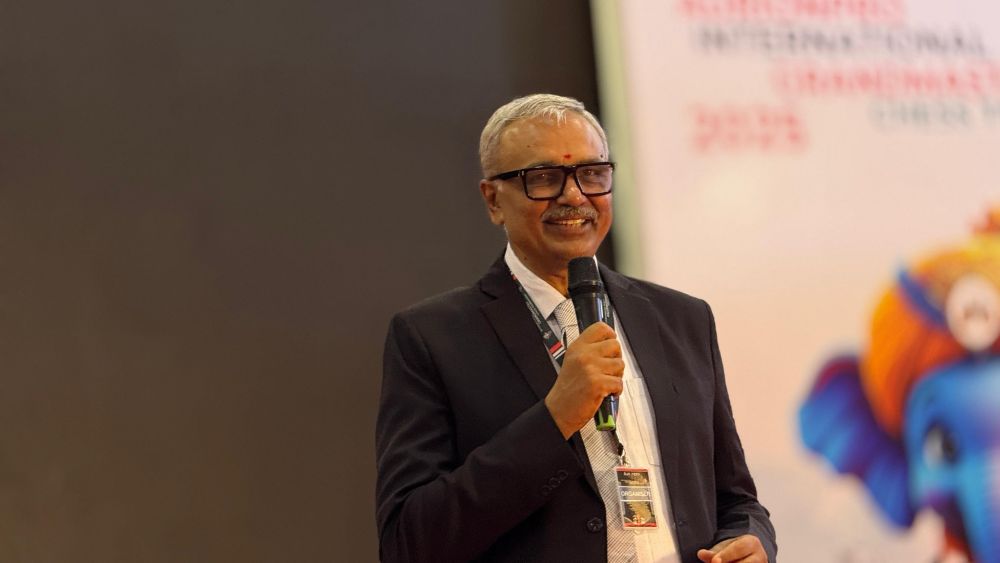
FI Praful Zaveri is the founder of the Indian Chess School Academy. He is a popular trainer in Mumbai and also the author of the critically acclaimed beginners' manual 'The Chess Course'. His vision is to build the chess culture in his hometown, Mumbai, as well as in India, and help the country produce many more grandmasters in the future. The Mumbai International Chess Festival is his brainchild.


