

Arkady Dvorkovich assesses his 8 years of work as a FIDE President
Arkady Dvorkovich became the FIDE President in 2018 first and then once again won the elections in 2022. He has been at the helm of FIDE for 8 years now. We speak to him about the biggest challenges facing FIDE, what are his opinions on them, what is the thing is most proud of in his tenure as a FIDE President and what is that one thing he regrets the most. With 2026 elections coming, will be once again be running for FIDE Presidentship? If yes, what will be his vision for the next 4 years. All this and more in this interview.
Sagar Shah (SS): Arkady, thank you for your time. The other day I was at the FIDE Council meeting and was amazed to see the variety of people on the panel. To name a few: Mohamed Al-Modiahki, Lukasz Turlej, Nigel Short, Akaki Iashvili, Emil Sutovsky, Jose Antonio Carrillo, Michael Khodarkhovsky, Zurab Azmaiparashvili, Vishy Anand, Zhu Chen, Makropoulous, Tsepisho, Joran Aulin-Jansson, Mario Antonio Ramirez, Victor Bologan, Alexander Martynov, Roberto Rivello, Dana Reizniece-Ozola, Sava Stoisavljevic, Polina Tsedenova and Konstantin Kiselev. This is an incredible team you managed to put together over the last four years.

Arkady Dvorkovich (AD): We started back in 2018 with the first elections. Since then, the team has changed only slightly; the core has remained the same. I am happy that we were able to navigate the difficult period caused by the pandemic and geopolitical crises with good results. The names you mentioned are a combination of Council and Management Board members who handle strategic oversight, decision-making, and operational work. The background of the team is diverse; while most are related to chess, they geographically represent the whole world. I am pleased we were able to work together as a real team rather than just a collection of individuals.

SS: When you won the elections in 2022, you brought together many of these people, some of whom carried over from 2018. There are several Grandmasters, including five-time World Champion Vishy Anand and Women's World Champion Zhu Chen. Are there also people on your team who were previously your opponents?
AD: Yes, Nigel has been a very good addition to our team. He had been running against me for some months back in 2018, but then we agreed to work together. He plays an important role in bringing new federations on board, in resolving some issues in the national federations and regionally, and he always has had many ideas about how to do things based on his chess experience.
SS: With the 2026 elections coming up in FIDE, I saw, and this is interesting, maybe you also are aware, there is a website on World Chess where they mentioned it will not just be you, but there will be Kirsan Ilyumzhinov who will come back. There will also be Wadim Rosenstein. What are your thoughts on this?
AD: Well, I saw this new product of World Chess and looked at it for a few minutes, no more, since I am not really interested in those projections. Our team and myself are most preoccupied with current work, not with political stuff. Of course, a big factor under any projections is the risk of sanctions, and I cannot hide that this is public information. The chances depend heavily on how you assess the risk of sanctions. If you assess this risk as zero, then I believe the chances that our team will be supported again are much bigger than any of those figures shown on the screen. If you believe that the risk of sanctions is 50%, then our chances are 50%. It is as simple as that.

Regarding Mr. Ilyumzhinov, I don't know his plans. He did some public interviews and some public statements. I don't think there is any chance for two candidates from Russia to take part in the elections; that doesn't look really smart from my point of view. As far as Wadim is concerned, he was quite active during the last few weeks as he is new in chess politics. He was in chess itself for some years, I think about three years now, but he is new to chess politics. So, if he believes that I will be under sanctions and if he wants to run, then of course it is smart to start meeting people, at least. But whether his chances are big enough is not for me to assess.
SS: What are your thoughts on some of the subjects that I wanted to go over? This is from 2022 to 2026, where work has been done. If I had to ask you for one thing that you have done in these last four years that you are very proud of, what would it be?
AD: Well, I would say that I am really proud of the change in the perception of chess at the top level. We were able to bring our key events to a level of organization where most players and spectators became happier about what is going on. Not all of them - we still face criticism about some of the issues - but I saw real progress in the way things are being organized. We created a real machine from the FIDE team that works on all subjects in a systemic manner.
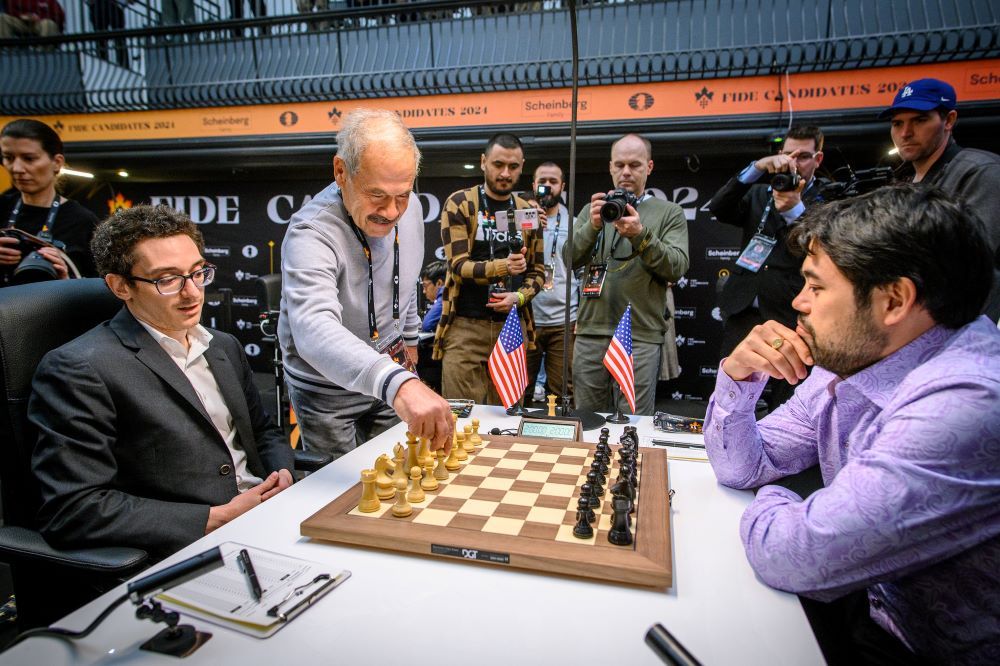
In some areas the progress is bigger, in some areas it is still very small. For instance, this year is the Year of Chess Education, where we just started to make some progress. But that is exactly why this year is important to bring attention to it. So again, the real thing that I am proud of is the way we are working. If that continues, whoever the president is - I would like to stress it - results will come. Real results will come. But I cannot single out any specific project or specific event, whether it is social chess or the success of this Candidates Tournament, for instance, which I think is the best organization I saw for the last few years - many years, in fact. I think it is just the way we structured the work and are going forward.
SS: So, what you are talking about with this "machine-like" thing is that you were able to structure people with the right roles for the right things, and they got the job done.
AD: Exactly. Exactly. We are still missing people for some positions. We need to strengthen marketing, for instance. We need to still strengthen the production capabilities. We need to have more people working with national federations to serve them in the right way. Many things are still to be done, but the core is already there. It doesn't mean that everyone is perfect; everyone has pluses and minuses, of course. But again, I can see that whatever subject appears, whatever issue appears, we have people who can deal with the subject.
World Championship Cycle
SS: Interesting. There have been a lot of discussions on the World Championship cycle, and I believe that would be one of the important things for you as the FIDE President. Are you happy with how things have panned out?
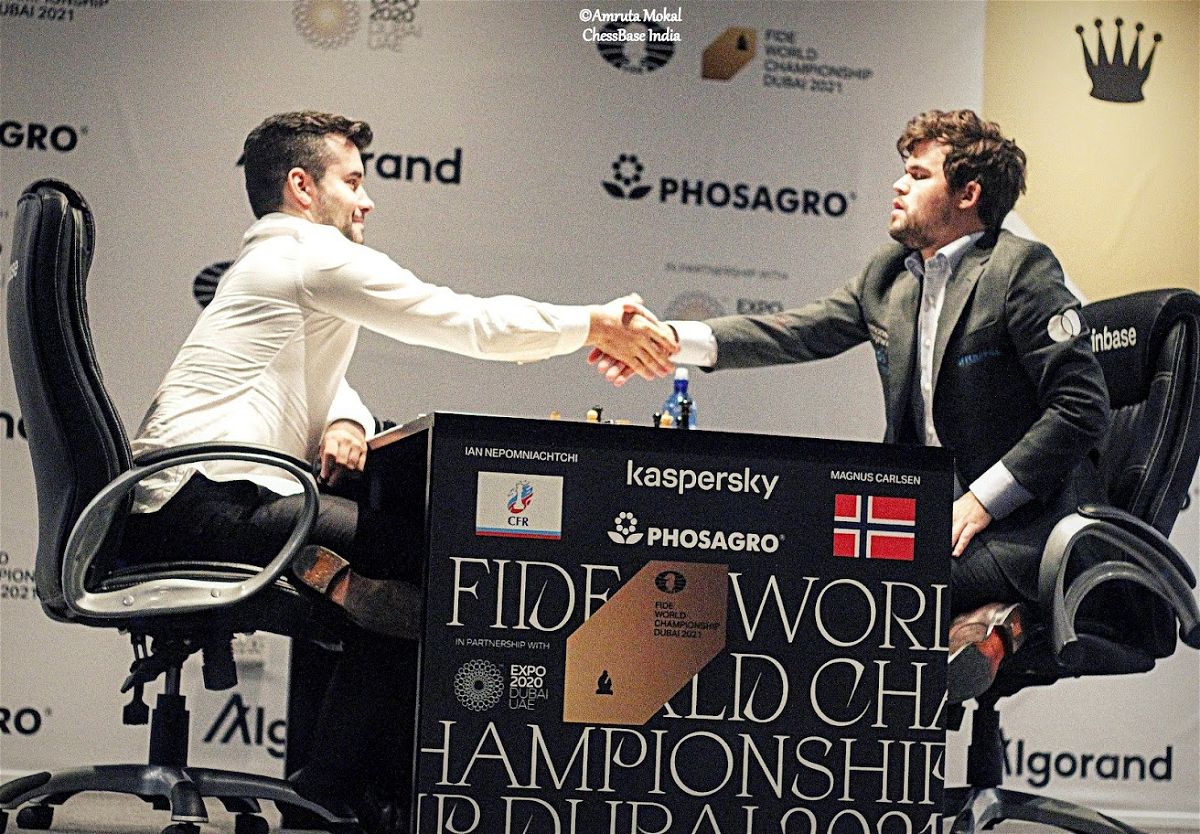
AD: You know, the World Championship cycle is the biggest asset we have, besides probably the Olympiad, and then the rating and title systems. Those are the key assets FIDE has. Of course, given the changing nature of chess, the appearance of a huge online chess world, and faster time controls, we are still undergoing a transition from the previous format of the World Championship cycle to something new that we don't know yet how it will look in the future. We built new tournaments like the Grand Swiss in particular, while keeping the World Cup as a core event where people qualify from national and regional continental championships. We created a FIDE Circuit framework that allows us to count results from all kinds of top events around the world, so we are not missing anything important.
But again, that is not final. Both the FIDE Circuit and the combination of events, now that we added the Total Chess Tour for instance, require fine-tuning. I think after we have the first Total Chess Tour events, when we see that it works - and I am confident that it's going to work and it's going to be real fun and exciting both for players and spectators - I think we can finalize the new structure of the World Championship, including time controls and the combination of different tracks leading to the World Championship cycle.

But even now we can see that some events are still enormously interesting, like this Candidates Tournament. There are a huge number of spectators and followers, and the level of fight and level of stress, as well as all kinds of mistakes, is just amazing. But on the other hand, I can see that the World Cup is a bit too long, and we need to see if we can reduce the length without losing the excitement that exists around the World Cup with its knockout format. So again, we will analyze this, discuss it with players, with partners, with media, and I think we will find an optimal concept for the next 10 years very soon.
SS: You are someone who comes across as not having all the answers always. You come across as someone who says, "I don't know, we are trying out, we will see how it goes, and we will adapt." This approach is not very common in a person at your stature, running FIDE as the President. Is that something that you try to bring in yourself and also in your team?
AD: We do have a certain vision and certain principles, but how to apply those things in practice can vary both from time to time. I mean, not a short period of time, but from one 10-year period to another 10-year period. And also a lot depends on how the public perceives what we are doing. We are trying to see if we are doing the right thing based on how people react to those things. Sometimes maybe it is a bit too much and we should not listen to everyone, and instead have our own strict position, but I think it is important to have feedback and to understand if at least the direction is the right one or not.
Again, I am not saying that we should have doubts every time. We need to have some deadline where we identify an optimal decision for the next long period. I think 10 years, or eight years at least, is the right one, and then we just follow this decision. After this period ends, of course, anyone can reconsider some of the things; otherwise, players, media, and partners will not have a certain degree of understanding of what we are doing, why we are doing it, what the KPIs are, and what the goals are. So that is the approach we take, and we need to take it in the future as well.
SS: You came from a background which was very big. You were the Deputy Prime Minister of Russia, then you organized even the FIFA World Cup. Spending so much time in chess, how has that been for you personally? Because I know that you love chess, but just overall from a perspective of your career, has that been something that you have enjoyed?

AD: I enjoyed it a lot - working as the FIDE President with all the colleagues and team members, seeing chess players, both at the top level and kids growing around, and working with all kinds of partners - business partners, media, and governments as well. These are new challenges and some fresh looks, and I am still enjoying it. Of course, some refreshment is needed, and I hope that this election year will bring more feedback from various parties and we will be able to take on board new ideas and do things differently in some directions. Hopefully in a few years, new strong people will appear, maybe from inside the team, or maybe someone will come on board from outside who will be able to take over, since I am not going to stay forever. That's clear. But as for now, I am still excited about working for FIDE and committed to doing it further.
SS: How difficult have the last four years been for you personally?
AD: Extremely difficult, of course, due to the geopolitics, and recently new challenges became evident related to the Middle East conflict. It has been far from easy. But again, you have to deliver. If anyone is elected and makes promises to run the championship cycle, to do the Olympiads, or to provide for the social mission of chess, if you are committed to doing it, you have to do it whatever happens around. That's my approach every day.
Online Chess
SS: Online chess is also something that's growing, and somehow FIDE has focused on over the board chess. Do you see online chess becoming important for FIDE?
AD: Well, it was a decision back in 2018 not to intervene directly into online chess from the FIDE side. We thought that it's a competitive world where we need to have a few partners, and only competition can bring good results. We saw this kind of competition, though of course there is one dominant player and then a second one, and then probably the rest. Also, FIDE Online Arena is one of the rest for us, as an important partner. Now we are at the crossroads with all that is happening in the online world. Now we are working both with Chess.com, Lichess, FIDE Online Arena, World Chess, and occasionally with other partners as well. We are talking to all of them about the prospects, about what we should do, and how we should do things together. I would not say that online chess became more important for our purpose. It just became part of life.
We need to both use this opportunity to spread chess across the world to give better access to chess to everyone, and to understand what the challenges are, related to cheating for instance and other things. Now we are developing a strategy in this regard. So by September, by the FIDE Congress time, we'll have a clear view on how we should do those things together with our partners, both existing and potential ones. Also, of course, we can see that the way chess players build their life and strategies is different now. There are more events, including online and the Esports World Cup in Saudi Arabia, for instance.
So we need to make sure that players have all the opportunities to make their careers, including earning money, but also not being too tired of chess or too overwhelmed by chess. I can see that some players are already playing non-stop, and it's too much.
SS: I mean, even now with the Candidates, there were two huge events that kind of clashed, right? Grenke and Menorca. This is happening all the time.
AD: Exactly. Exactly. And we need to find a way to streamline our calendars. That is one of the challenges that online brought to the table.
Sponsorships
SS: In terms of sponsorships, has that been something that you are happy about, how it has panned out? Can you tell us?
AD: Well, sponsorship is always a challenge for any sport. Of course, there are some like FIFA, which are outstanding in this picture with huge sponsorship money, or the Olympic Games, or such things as poker for instance, but poker is not a sport recognized by the International Olympic Committee. It is very attractive but just in a different world. But any other sport basically faces huge sponsorship challenges. Moving from predominantly Russian sponsors to the new combination of sponsors was a tough process, but now we have clear commitments from quite a few sponsors, including, of course, our long-standing partners already such as Freedom Group and the Scheinberg family. We are happy about that.
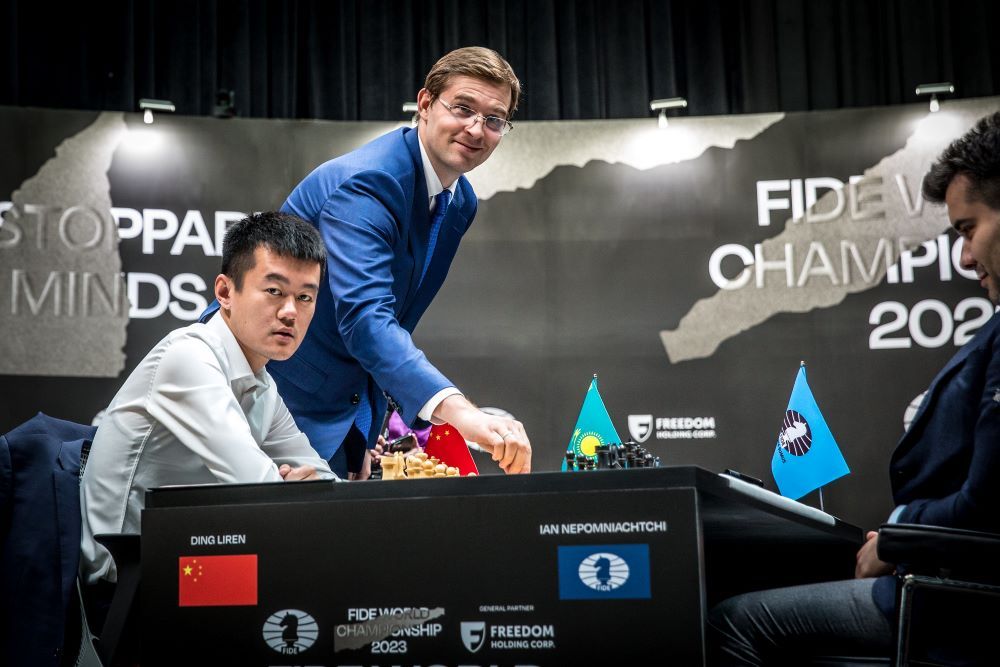
Also, we have big interest in hosting Olympiads, which brings us additional funds as well. It's the most expensive event, but the most attractive event for all countries together not just for top-level chess, but for all countries together. So we are not fully satisfied, since what we have is not enough, but at least we have some guaranteed amount and combination of sponsorship already to build on that to have more in the future. So that's the hard work we are having now. It is far from easy, but the negotiations that are going on right now put some optimism in me that we will be able to do so, including diversifying to new markets, like the US market in particular.
SS: Like in 2024, the World Championship match had Google, and that brought a lot of promise.
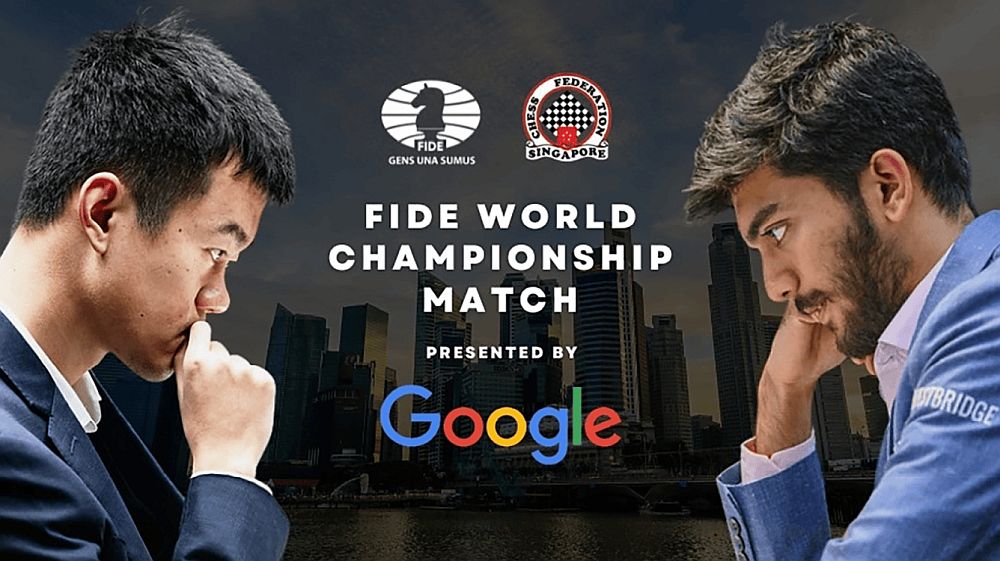
AD: That's what I'm saying. There are more chances to get into the American sponsorship base than before, having Google in the previous World Championship match. Now it's easier to talk to American companies about that. Another example that people noticed, certainly, is our contract with Norway Chess regarding running the Total Chess Tour, where already people saw a commercial value besides a pure reputational value. Such people like Erling Haaland, the highest-valued football player from the English Premier League, joined the project and brought with himself other partners as well. So this example shows that anything is possible.

SS: You personally believe in this, that chess has commercial value more than this rich history, tradition, and the governments who are involved?
AD: I think so, yes. Chess has a commercial value, but any commercialization of chess would require taking some risks. The question is if the whole community, if we are together, are ready to take those risks to invest - not just finding partners from time to time for new tournaments, even having long-standing partners - but to invest and take those investment risks. Without those risks, we will not be able to get any commercial return.
SS: You are open to it.
AD: Yes, we are open to it, but we will be careful enough not to create reputational risks for chess.
Women's Chess
SS: About women's chess—this is one of the important things FIDE has been working on. Are you happy with the direction it's going in?

AD: I'm happy with the direction. I'm not happy with the speed, though. I hope that we could do more. The progress is evident. We have higher prize funds and more events for women, including six Grand Prix stages. Recently we increased prize funds both for the Women's World Cup and the Women's Grand Prix series. We have mixed team competitions where having women players is a must on the rosters, and I think the progress is good. Also, we did camps for young girls. We created better protection frameworks against any kind of harassment or abuse. But we are not in an ideal world here. Still, there is a trend of losing talented young girls at some stage of their careers because they're not feeling safe enough to continue chess careers - to devote their lives to chess. So a lot of work is still to be done, but the direction is good.\
SS: In the last four years was there any decision that you have taken which you regret a bit?
AD: Yes, it's a very good question. Of course, for any mistake I can find lots of justifications, but of course there were things that were only partially under our control. Let's take this small example: the mistaken rating calculations for speed chess, where for instance Daniel Naroditsky and Bortnyk complained at some point. That was a pure technical mistake that brought this attention. Of course I regret that we made this mistake, and it was very difficult to correct it in the right way.

Of course, I regret that our system doesn't allow us to take more definite action against any kind of behavior that affects chess players. For instance, David Navara is still affected by what happened during the last couple of years. Some people were complaining about the conditions in some tournaments, where probably we could do better but didn't.
Some players and the public complained about the FIDE Circuit or our take on time controls - that there are multiple ones and we do not streamline those things. So, what I regret is not about specific decisions, but sometimes about maybe a deficit of decisiveness in some of the actions. Like you mentioned in the beginning, sometimes we are not straightforward enough; we have doubts, we ask maybe too many questions, and because of that, we move more slowly than we could. That's a kind of trade-off that we are facing. Probably in some cases, we could be more decisive.
SS: Thank you for answering that. And lastly, I want to ask you: now with the next elections coming up, what is it that people can look forward to in the world of chess? You've been at the helm of FIDE for eight years now. In the next four years, what would change?
AD: For the next four years, it's a bit premature to announce any new program. Of course, we are working on that program. The first part will be the continuation, in the right way, of what we started doing. But there are the things we already discussed: the right balance with online chess, how to partner with this world and how to make sure it contributes positively to the development of chess. There will be the updated structure of the World Championship cycle, including those new tours and streamlining the whole calendar of chess, and bringing more commercial value to chess products, including the broadcast products and media products where we are working together with you guys, for instance. We are doing this more and more from event to event, and I think people started appreciating that. People saw that the quality is higher. So again, working along these old lines but in a new, refreshed way is the key here.
But almost every week, people are coming to us with new ideas and new projects. Norway Chess appeared from almost nowhere, and after a few months of discussion, we came up with a new product. We were able to agree with Freestyle. So I think by the time of the Congress and elections, we'll see that some of the ideas will turn into startups and new products, and people will expect some new success stories as well.
SS: So would you say that the last couple of years were the time of expansion, and the consolidation will come at some point?
AD: Yes, correct.
SS: Maybe in the next three or four years.
AD: Next three or four years is a reasonable time frame to do that. Correct.
Related News

छह नए विश्व विजेताओं के साथ हुआ विश्व यूथ का समापन, भारत की प्रतीति नें जीता रजत पदक
World Youth Chess Championship Concludes in Grand Style Six New Champions Crowned

वैशाली नें जीता डबल्यू आर टोक्यो रैपिड का खिताब

प्रज्ञानंदा की वापसी ! बने नॉर्वे शतरंज के विजेता ! फिर से हुए 2750 पार!

लय में लौट रहे प्रज्ञानन्दा करेंगे ग्रैंड चैस टूर से वापसी? सिंदारोव को हराया

मेरा विश्व कप का अनुभव : नन्हें युविर की कलम से

सिंदारोव बनें फ़ीडे विश्व कप 2025 विजेता 🏆

विश्व कप सेमी फाइनल : वे यी नें ड्रॉ के लिए हाथी किया कुर्बान , दोनों बाज़ियाँ बेनतीजा

दिल टूटा,विश्व कप से अर्जुन हुए बाहर, सिंदारोव,वे यी और एसिपेंको अंतिम 4 में

अब टाइब्रेक पर टिका अर्जुन के विश्व कप सेमी फ़ाइनल पहुँचने का रास्ता